Our first quarterly update of various economic and social indicators under Trump’s second term as president.
Trump’s Numbers, April 2026 Update
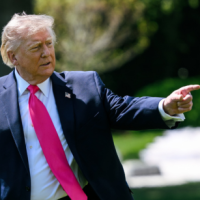





Our first quarterly update of various economic and social indicators under Trump’s second term as president.

In a speech to what he called “the single largest gathering of American farmers that the White House has … ever had,” President Donald Trump distorted the facts on the estate tax, soybean exports and more.
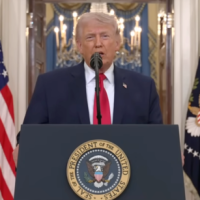
A month after the U.S. and Israel launched airstrikes on Iran, President Donald Trump addressed the nation in a prime-time speech on April 1, saying the military operation was “getting very close” to completing its mission. Trump repeated some false and questionable claims we’ve written about before.
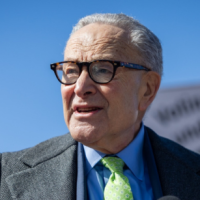
Senate Minority Leader Chuck Schumer has said the SAVE America Act “could disenfranchise over 20 million American citizens,” while Republicans dispute that the voter registration and ID bill would block any legitimate voters. Election experts say the bill, which isn’t expected to pass, would make it difficult for some unknown number of voters to register and cast a vote.
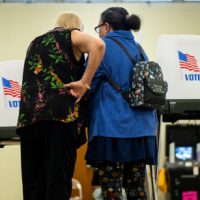
On March 17, the Senate began debate on the SAVE America Act, a Republican-backed voter identification and registration bill that passed the House last month. Here, we answer several questions about the legislation, many of them asked by our readers.

In discussing his reasoning for launching U.S. airstrikes on Iran, President Donald Trump said, “An Iranian regime armed with long-range missiles and nuclear weapons would be a dire threat to every American.” But arms control experts have disputed his claim that Iran “soon” could have missiles capable of reaching the U.S., and they say there’s a lack of evidence that the country “attempted to rebuild” nuclear enrichment facilities damaged by U.S. strikes last year.
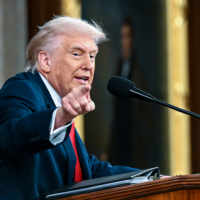
In the first State of the Union address of his second term, President Donald Trump proclaimed that “our nation is back, bigger, better, richer and stronger than ever before.” But our review of his speech found that he distorted a number of facts about the state of the economy, health care, immigration and other topics.

In recent weeks, President Donald Trump has made a series of claims about the economy, a topic that should feature prominently in his State of the Union address to Congress on Feb. 24.

The Department of Homeland Security hasn’t provided evidence for some statements administration officials made within hours of the Jan. 24 fatal shooting of Alex Pretti by federal immigration officers in Minneapolis, and some of those statements appear to be contradicted by bystander video shared publicly so far.
At the one-year mark of Trump’s second term, we launch our “numbers” series, providing various statistical measures of his presidency thus far.